> For the complete documentation index, see [llms.txt](https://docs.coindpay.xyz/llms.txt). Markdown versions of documentation pages are available by appending `.md` to page URLs; this page is available as [Markdown](https://docs.coindpay.xyz/landing/start/customers/payment-metrics.md).
# Payment metrics
No-KYC payment limits with AML checks, KYC for large transactions, real-time processing, average settlement time, success rate, and low complaint rate.
## 3D Secure
3D Secure helps prevent fraud and keeps your customers’ payments safe and secure.
## No KYC
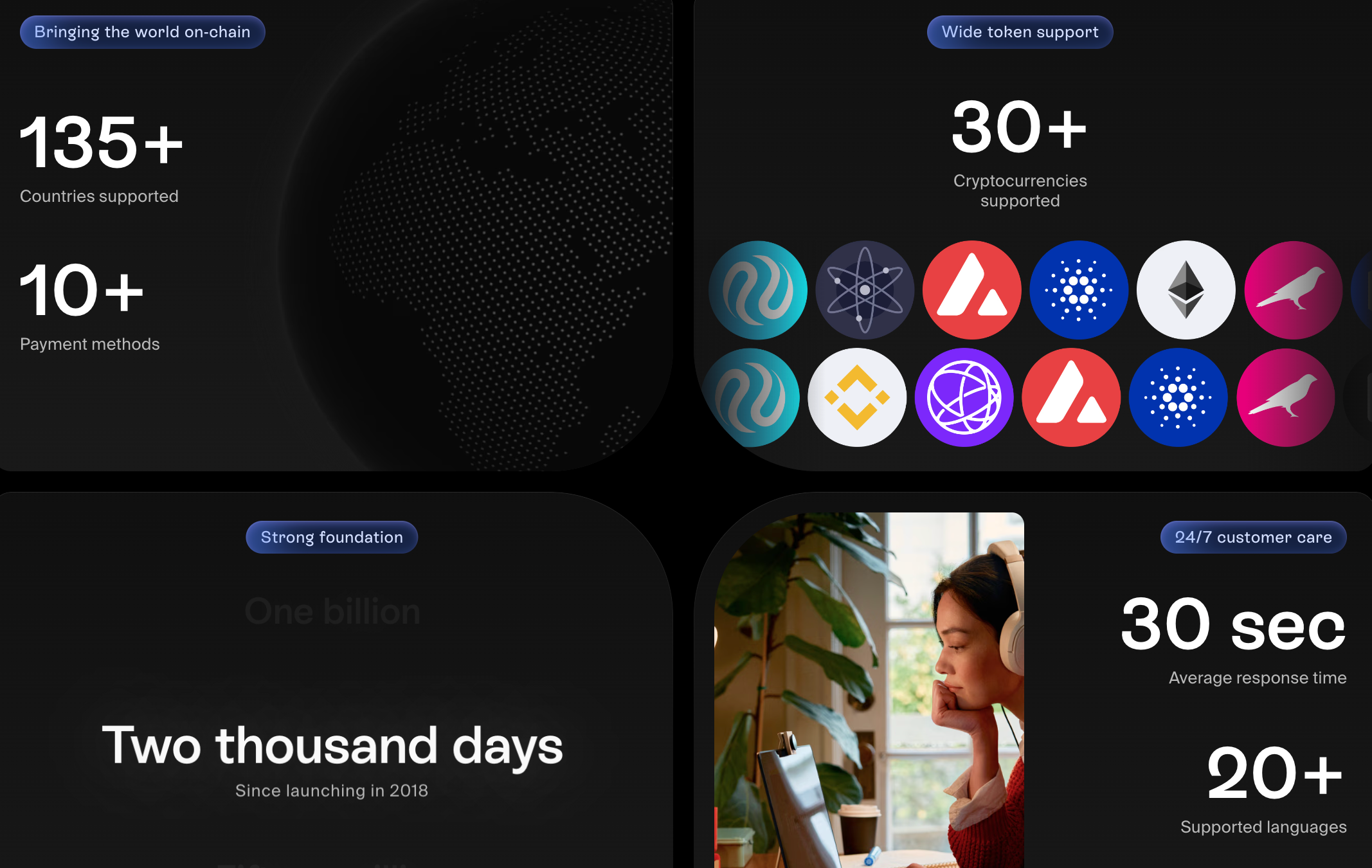
CoindPay integrates multiple acquiring partners with varying No-KYC limits (e.g., €700, €1,000, €1,500), optimizing approval rates for low-value transactions. Consumers benefit from a seamless \~30-second checkout via wallet payments such as Apple Pay and Google Pay. Funds are settled through CoindPay’s settlement gateway within 5–10 minutes (net of applicable taxes) directly to the merchant’s wallet.
## Need KYC
{% hint style="warning" %}
For Payments/On-Ramps, CoindPay typically triggers additional KYC or enhanced verification only when a user’s cumulative transaction volume exceeds the No-KYC Limit. However, KYC may also be required below this threshold if the user is flagged by anti-fraud systems, which can occur for various unpredictable risk indicators.
{% endhint %}
1. Once a user has successfully completed KYC, CoindPay generally does not require identity verification again for subsequent purchases, provided that:
* The user logs in with the **same account**
* The **device, IP, and region** remain consistent
* No **risk or compliance rules** are triggered
* Their cumulative transaction volume is **below the No-KYC Limit**
Under normal circumstances, repeat purchases are processed without any additional KYC steps
2. When might CoindPay require additional or repeated KYC?
Additional verification may be required if any of the following conditions occur:
| Scenario | Description |
| ------------------------------------------ | ------------------------------------------------------------------------------------------------------------ |
| **Cumulative volume exceeds No-KYC Limit** | Crossing the max limit triggers enhanced compliance checks under CoindPay’s risk policies. |
| **Higher purchase limits needed** | User exceeds basic limits and needs to unlock higher KYC tiers (address verification, proof of funds, etc.). |
| **Country/region changes** | The IP, payment card country, or geolocation differs from prior KYC data. |
| **New payment method added** | Switching or adding a new card may require additional verification. |
| **Risk or suspicious activity detected** | Unusual patterns trigger CoindPay’s risk engine, which may require re-verification. |
| **Long inactivity period** | Some regions require KYC refresh after prolonged inactivity. |
3. Typical User Experience
* **First purchase:** Full KYC completed.
* **Subsequent purchases:** No repeated KYC required.
* **Only when cumulative purchases exceed the no-kyc limit** or certain risk conditions apply will additional checks appear.
This ensures smooth repeat transactions while maintaining regulatory compliance.
CoindPay’s KYC (Know Your Customer) sharing system streamlines user identity verification by integrating with partners and third-party providers like SumSub. This process ensures compliance with regulatory requirements, while minimizing repeated verification steps for users.
When users complete KYC directly within CoindPay’s widget or wallet, the verification typically includes:
* Identity verification via passport, ID card, or driver’s license.
* Liveness verification (selfie or video).
* Address confirmation (required for IBAN and card features; for cards, address is entered without document upload).
* Phone number verification (required for IBAN feature).
**Special considerations**
* **US residents:** KYC for US users requires additional processing through ZeroHash. If verification fails, CoindPay handles the case accordingly.
* **KYC renewal:** KYC status can expire, requiring users to re-verify.
* **Error handling:** Common errors include invalid parameters or failed verification attempts. Support is available for resolution.
## **Order** Metrics 📊
### **1. Settlement Time**
* **Typical Range**: 3-10 minutes or even tens of minutes.
* **Factors Influencing Time**:
* **Payment Method**: Bank transfers may take longer than card payments.
* **Blockchain Network**: Different blockchains have varying confirmation times.
* **AML/KYC Checks**: Compliance procedures can add to the processing time.
> **Note**: Specific settlement times can vary based on the above factors and may differ between transactions.
### **2. Refund Rate**
* **Typical Range**: Generally low; however, exact figures are not publicly disclosed.
* **Influencing Factors**:
* **Transaction Disputes**: Chargebacks or disputes can lead to refunds.
* **User Errors**: Mistakes during the transaction process.
* **Fraudulent Activities**: Fraudulent transactions may result in refunds.
> **Note**: For precise refund rates, it's recommended to consult CoindPay's official documentation or contact their support team.
### 4. **Refund Processing Time**
* **Typical Range**: From a few minutes to several hours.
* **Factors Influencing Time**:
* **Payment Method**: Refunds to bank accounts may take longer than to crypto wallets.
* **Blockchain Network**: Different blockchains have varying transaction times.
* **AML/KYC Checks**: Compliance procedures can add to the processing time.
> **Note**: Specific refund processing times can vary based on the above factors and may differ between transactions.
### 5. **Refund Scenes**
* **Overpayment**: The customer sends more than the required amount.
* **Underpayment**: The customer sends less than the required amount.
* **Payment Timeout**: The customer fails to complete the payment within the specified time.
* **Fraudulent Transactions**: Transactions identified as fraudulent may be refunded.
* **User Disputes**: Customers may request refunds due to various reasons.
> **Note**: Each refund scenario may have different processing times and procedures.
## Monitoring
{% hint style="info" %}
CoindPay operates dispute and fraud monitoring programs to help merchants maintain compliance with card network requirements and protect the overall payment ecosystem. Merchants are expected to keep disputes (chargebacks) and confirmed fraud at acceptable levels. Exceeding thresholds may trigger monitoring programs, fees, or restrictions until performance improves.
{% endhint %}
### 1. Overview
* **Dispute / Chargeback:** A payment reversed due to a customer dispute.
* **Confirmed Fraud:** Transactions identified as fraudulent.
* **Key Principle:** Monitoring programs focus on **preventing disputes and fraud**, rather than outcomes of individual cases.
CoindPay continuously monitors merchant performance and provides support to reduce disputes or fraud. Merchants may be asked to provide details about:
* Checkout / user flow
* Recent changes in operations
* Measures to reduce risk
The goal is to ensure both merchant performance and the overall payment system remain healthy and compliant.
### 2. Monitoring Programs
#### **Visa Monitoring Program (VAMP)**
VAMP monitors disputes, fraud, and card testing activity. Every month, CoindPay calculates metrics based on Visa reports from the previous month.
| Metric | Definition | Threshold |
| --------------- | --------------------------------------------------------------- | ------------------------------------------------------------------------------------------------------------------------------------------- |
| **VAMP Count** | Total number of disputes and fraud (from TC15 and TC40 reports) |
Non-compliant: 5 Excessive: 150 in CEMEA / 1,500 elsewhere
|
| **VAMP Ratio** | Ratio of disputes/fraud count to total captured payments |
Non-compliant: 0.5% Excessive: 1.5% in LAC, 2.2% elsewhere (from May 15, 2025) From Apr 1, 2026: 2.2% in CEMEA, 1.5% elsewhere
|
| **VAMP Volume** | USD value of disputes and fraud | Excessive: 75,000 USD in CEMEA; N/A elsewhere |
**Enumeration Monitoring** tracks card testing attempts:
| Metric | Threshold |
| -------------------------- | --------- |
| **VAMP Enumeration Count** | 300,000 |
| **VAMP Enumeration Ratio** | 20% |
> Note: No fines are assessed for enumeration monitoring, but merchants should mitigate card testing activity.
***
#### **Visa Secure Excessive Fraud Program (US Only)**
| Metric | Threshold | Fine / Effect |
| -------------------------------- | ---------- | ----------------------------------------- |
| Fraud volume (3DS authenticated) | 75,000 USD | None, but liability shift lost until exit |
| Fraud rate | 0.9% | None, same as above |
***
#### **Mastercard Monitoring Programs**
1. **Excessive Chargeback Program (ECP)**
Levels: ECM (Excessive Chargeback Merchant) and HECM (High ECM)
| Level | Dispute Count | Chargeback Rate | Fines |
| ----- | ------------- | --------------- | -------------------------------------------------------------------------------------------------------------------------------------------------------- |
| ECM | 100-299 | 1.5-2.99% |